

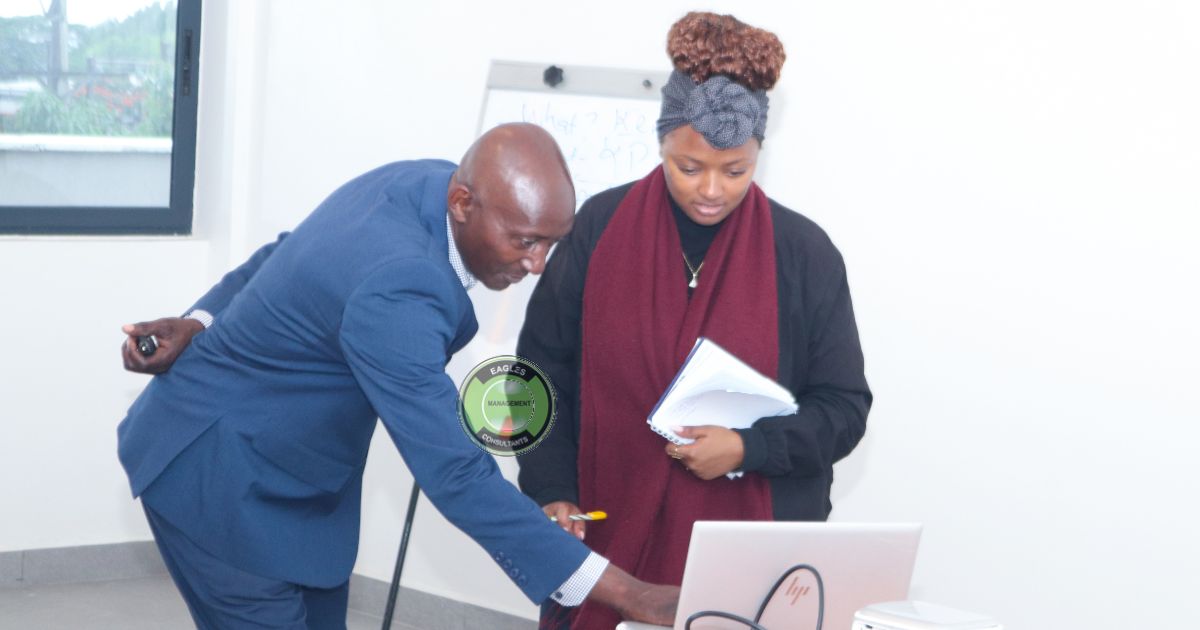
What if your whole team could learn new skills without leaving the office? That is the power of In-House Corporate Training in Kenya. A trainer comes to your workplace, studies your needs and teaches your staff in a way that fits your business. It saves time, cuts travel stress and gives better results than a generic public course. At www.eaglesconsultants.com, we help Kenyan companies build skilled, confident and motivated teams. In this guide, you will learn the benefits, the best formats and how to pick the right training provider.
What Is In-House Corporate Training in Kenya?
In-house corporate training means a training provider delivers a program to your staff at your own premises or a venue you choose. The content is built around your company’s goals, challenges and culture. Staff learn together, so the lessons are easy to apply on the job.
This is different from public training, where people from many companies attend one fixed course. With in-house staff training, you control the topics, the dates, the group and the style of delivery.
Many Kenyan companies now prefer in-house corporate training programs because they are:
- Customized to your industry and daily work.
- Flexible in dates, hours and length.
- Private, so staff can talk openly about real company issues.
- Practical, with examples taken from your own workplace.
Banks, saccos, schools, hospitals, factories, NGOs and county offices all use this model to build skills and improve performance.

Top Benefits of In-House Corporate Training in Kenya.
There are strong reasons why in-house corporate training in Kenya keeps growing. Here are the main benefits.
1. Training Built Around Your Business.
Every company has its own goals. A good in-house training provider starts by learning your challenges, then builds a course that solves them. Your staff learn skills they can use on Monday morning, not general ideas that fade.
2. Lower Cost Per Person for Larger Teams.
When you train many people at once, the cost per person is often lower than sending each one to a public course. You also save on transport, accommodation and time away from work. Because prices depend on group size and customization, ask for a quote that matches your plan.
3. Less Time Away From Work.
Staff do not travel long distances or spend days out of the office. You can plan short sessions, half-day workshops or weekend programs so work keeps moving.
4. Stronger Teamwork.
When colleagues learn together, they share the same language and tools. This builds trust and improves communication across departments. Many companies mix training with team building activities to make this effect even stronger.
5. Confidential and Open Discussion.
Staff can talk about real problems, such as slow service, weak systems or poor teamwork, without outsiders listening. This leads to honest solutions.
6. Easy to Measure Results.
You can track changes in sales, customer feedback, errors, attendance and staff morale before and after training. This helps you prove the value of your training budget.
7. Higher Staff Motivation and Retention.
Employees who feel the company invests in them are more likely to stay and work harder. Staff development programs show people that they have a future in your organization.
Popular Formats of In-House Corporate Training in Kenya.
There is no single best format. The right choice depends on your goals, group size and schedule. Here are the most common formats.
1. On-Site Classroom Workshops.
A trainer comes to your office and teaches in a meeting room or hall. This format works well for skills such as customer care, communication and time management. It is simple, direct and easy to organize.
2. Off-Site Training at a Hotel or Conference Venue.
Your company takes staff to a hotel, resort or conference center for one or more days. A change of place helps people focus and think freely. This is common for leadership training, strategy sessions and executive retreats. If you need help choosing a place, read our guide on corporate training venues in Nairobi at www.eaglesconsultants.com.
3. Training With Team Building.
Here, learning is mixed with outdoor games, challenges and group activities. It is a great way to teach teamwork, trust and problem-solving while keeping energy high. Many companies use this format for team building training in Kenya.
4. Virtual and Online Live Training.
A trainer teaches over video call. This suits teams spread across towns or counties, such as sales staff and branch teams. It cuts travel costs and lets you train many people at the same time.
5. Blended Learning.
Blended learning combines in-person sessions with online lessons, short assignments and follow-up coaching. It keeps learning going long after the workshop ends.
6. One-on-One Coaching and Mentoring.
For managers and executives, personal coaching gives focused support. It works well alongside group workshops.
7. Short Talks and Motivation Sessions.
Sometimes a team needs a quick boost. Short staff motivation talks, keynote sessions and morning briefings can lift morale and refocus the group on company goals.
Best In-House Training Topics for Kenyan Companies.
Choosing the right topic matters as much as choosing the right format. Here are the most requested corporate training topics in Kenya.
- Customer care and customer service training. It helps frontline staff handle clients with skill and patience.
- Leadership and management training. It builds strong supervisors, team leaders and executives.
- Sales and negotiation training. It improves selling skills, closing and client follow-up.
- Emotional intelligence training. It teaches staff to manage stress, conflict and relationships at work.
- Communication and presentation skills. It makes staff clearer and more confident in meetings and with clients.
- Team building and teamwork. It builds trust, cooperation and shared goals.
- Time management and productivity. It helps staff plan, focus and finish work on time.
- Workplace ethics and professionalism. It sets a standard of behavior and builds company reputation.
- Change management. It helps teams adapt to new systems, new leaders or new rules.
- Health, safety and wellness. It protects staff and keeps the workplace safe and productive.
You can learn more about leadership and motivation programs at www.eaglesconsultants.com.
Step-by-Step: How In-House Corporate Training in Kenya Works.
A good program follows a clear process. Here is a simple path most providers use.
- Training needs analysis. The provider studies your goals, staff skills and gaps through interviews, surveys or meetings.
- Program design. The trainer builds a course outline, activities and materials that fit your needs.
- Scheduling and logistics. You agree on dates, venue, group size, equipment and refreshments.
- Delivery. The trainer runs the sessions using lectures, discussions, role plays, case studies and group tasks.
- Evaluation. Staff give feedback, and the trainer checks what they learned.
- Follow-up. The provider reviews progress, gives reports and offers refresher sessions if needed.
This process keeps training focused, organized and useful.
How to Choose an In-House Corporate Training Provider in Kenya.
The provider you pick decides the quality of your results. Use this checklist before you sign any agreement.
1. Check Experience and Track Record.
Ask how long the company has trained in Kenya, which industries it serves and what past clients say. A provider with real experience understands local business culture and challenges.
2. Look at Trainer Qualifications.
Good trainers have professional training, field experience and strong teaching skills. Ask to see profiles and areas of expertise.
3. Confirm They Customize Content.
Avoid providers who use the same slides for every client. The best in-house training companies in Kenya adjust content to your business, your staff level and your goals.
4. Ask About Training Methods.
Adults learn best by doing. Look for a provider that uses practical exercises, real cases, group work and open discussion, not only long talks.
5. Request References and Testimonials.
Speak to past clients if you can. Their feedback tells you whether the provider delivers what it promises.
6. Check Support After Training.
Ask if the provider offers follow-up, coaching or refresher sessions. Learning fades fast without support.
7. Review the Cost Structure.
Ask what the quote includes, such as trainer fees, materials, certificates, venue and refreshments. Prices change with group size, length and customization, so a clear written quote helps you avoid surprises.
8. Look for Clear Communication.
A good provider answers questions fast, explains its plan clearly and listens to your needs. This is a strong sign of how the whole project will go.
If you want a trusted partner, speak to the team at www.eaglesconsultants.com about your training needs.
Factors That Affect the Cost of In-House Training.
Many managers ask about cost first. Instead of one fixed price, these factors shape the final quote:
- Number of participants.
- Length of the program (half day, full day or several days).
- Level of customization and content design.
- Trainer level and expertise.
- Venue, whether on-site or off-site.
- Materials, certificates and equipment.
- Meals, refreshments and transport.
- Follow-up and coaching support.
Share your goals, group size and timeline with the provider so you receive a quote that matches your exact plan.
How to Measure the Success of In-House Training.
Training should bring real results. Use these simple methods to measure success.
- Pre-training and post-training assessments. Compare staff knowledge before and after.
- Staff feedback forms. Ask what they learned and how they will use it.
- Performance data. Track sales, customer complaints, errors and productivity.
- Manager observations. Supervisors can note changes in behavior over the next weeks.
- Customer feedback. Better service should show up in client reviews and repeat business.
- Retention and morale. Watch absenteeism and staff turnover over time.
Share the results with leaders so they can see the value of the investment.
Common Mistakes to Avoid When Planning In-House Training.
Even a good program can fail if you make these errors.
- Skipping the needs analysis. Without it, you may train on the wrong topics.
- Choosing only on low cost. The cheapest option may not give lasting results.
- Training too many topics at once. Focus on a few key skills.
- Ignoring management support. If leaders do not back the training, staff will not take it seriously.
- Having no follow-up plan. Skills fade without practice and reminders.
- Poor timing. Avoid busy periods like month-end or peak season.
Tips to Get the Best Results From In-House Corporate Training in Kenya.
- Set clear goals before you contact any provider.
- Involve managers in planning and attendance.
- Keep groups small enough for real participation.
- Choose a quiet venue with few interruptions.
- Mix theory with practice through role plays and group tasks.
- Plan follow-up sessions after three or six months.
- Celebrate success by recognizing staff who apply new skills.
Frequently Asked Questions About In-House Corporate Training in Kenya.
1. What is in-house corporate training in Kenya?
It is a training program delivered to your staff at your own workplace or a venue you choose. The provider designs the content around your company’s goals and challenges.
2. How is in-house training different from public training?
Public training brings people from many companies into one fixed course. In-house training is private, customized and delivered to your own team. This makes it more practical for your business.
3. Which companies use in-house corporate training?
Banks, saccos, schools, hospitals, manufacturers, NGOs, hotels, retail companies and government offices all use it. Any organization that wants to grow staff skills can benefit.
4. How long does an in-house training program take?
It can be as short as half a day or as long as several days or weeks. The length depends on the topic, the group and your goals. A good provider will suggest the best schedule for your needs.
5. How many staff can attend one in-house session?
Group size depends on the topic and style. Smaller groups allow more discussion and practice, while larger groups suit talks and motivation sessions. Your provider can advise on the best number.
6. Can in-house training be done online?
Yes. Live virtual training works well for teams in different towns or counties. Many companies also use blended programs that mix online and in-person sessions.
7. What topics can be covered in in-house training?
Common topics include customer care, leadership, sales, emotional intelligence, communication, team building, time management, ethics and change management. Programs can also be designed for your unique needs.
8. How much does in-house corporate training cost in Kenya?
The cost depends on group size, length, topic, trainer level and venue. Because every program is customized, the best way is to request a quote for your exact plan from www.eaglesconsultants.com.
9. How do I know if my company needs corporate training?
Look for signs such as poor customer feedback, low sales, weak teamwork, high staff turnover, frequent mistakes or low morale. A training needs analysis can confirm which skills your team needs.
10. How do I start with an in-house training provider?
Share your goals, staff numbers, preferred dates and training topics. The provider will study your needs, design a plan and send a proposal. You can begin the conversation with the Eagles Consultants team at www.eaglesconsultants.com.
Conclusion.
In-House Corporate Training in Kenya is one of the smartest ways to build a skilled, united and motivated team. It saves time, fits your business, protects privacy and delivers results you can measure. From customer care to leadership, from team building to motivation talks, the right program can lift performance in every department.
The key is to choose a provider who listens, customizes the content and supports your staff after training. Do not wait until problems grow bigger. Start today by sharing your goals and letting experts design a program that fits your company. Visit www.eaglesconsultants.com and take the first step toward a stronger, more productive team.